



Long before polyester dominated global wardrobes-a shift that accelerated rabidly from the 1950s onward as petrochemical industries scaled synthetic fabric production-clothing was made from what the land provided. Farmers, weavers, and local artisans across Asia worked with plant-based fibers native to their own regions: jute in Bengal, ramie in China, pineapple leaf in the Philippines, and banana fiber across tropical zones stretching from Okinawa to the Indian subcontinent.
They were the result of accumulated knowledge, developed over centuries by weaving communities in Okinawa’s Ryukyu Islands, indigenous groups in the Philippine archipelago, and farming households across South and Southeast Asia, about how to care for the plant, extract its fibers, and transform them into cloth suited to the climate they lived in.
Banana fiber is one of the oldest among them. Woven across parts of Asia for centuries, it predates modern conversations around sustainable fashion for hundreds of years. Today, it is gradually returning as a material with historical roots and qualities that remain relevant.
Banana fiber has a documented textile history across the Philippines, Japan, and broader parts of Asia, with each region developing distinct traditions around locally available plant species.
In the Philippines, the primary fiber came from abacá (Musa textilis), a banana relative cultivated specifically for its fiber rather than its fruit. Known internationally as Manila hemp, it is drawn from the leaf stalks and prized for its exceptional strength — used for ropes, mats, and ceremonial textiles long before colonial contact.
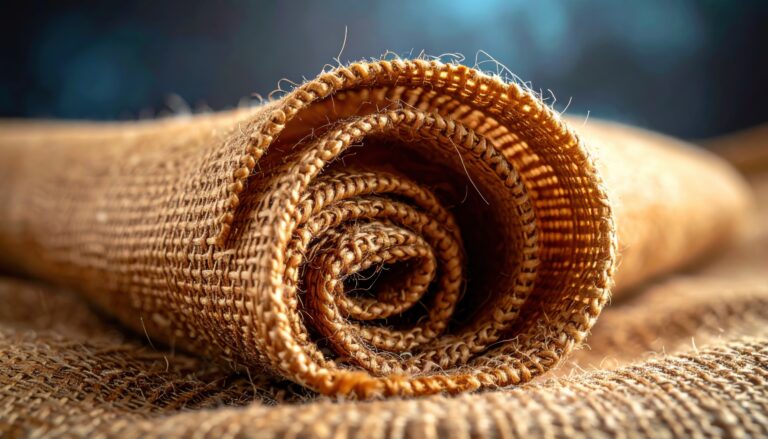
Photo: Abaca Mat
When explorer Ferdinand Magellan arrived in the Philippines in 1521, his chronicler Antonio Pigafetta recorded that the local population was already wearing clothing made from abacá — one of the earliest written accounts of the fiber in use. Filipino weaving communities in regions such as the Visayas, Bicol, and Davao developed their own techniques and traditions around this material, valuing it for its durability, lightness, and suitability to tropical climates.
In Japan, a parallel tradition developed around a different banana species. Bashōfu — woven from the fibers of the ito-bashō plant — has been produced in Okinawa since around the 13th century. During the Edo period (1600–1868), it was widely worn as summer-weight formal dress, prized for its lightness, smooth hand feel, and resistance to clinging to the skin in humid conditions.
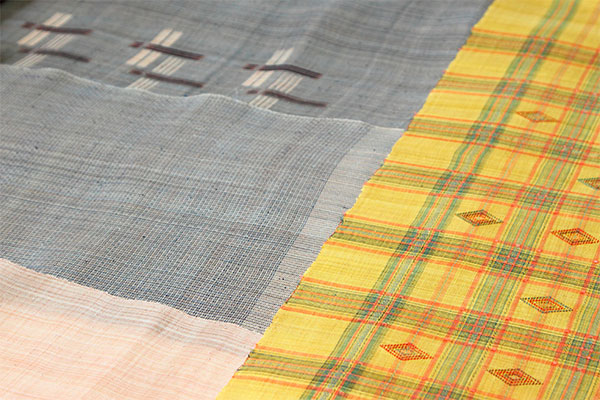
Photo: Banana Fiber Textile, Okinawa Convention & Visitors Bureau
The production process was demanding: from harvesting to finished cloth, the process requires approximately three months and around sixty banana trees per bolt of fabric, with fibers manually extracted, tied, spun, and hand-woven using traditional methods.
Though both belong to the broader world of plant-based banana textiles and share the same essential qualities of breathability and lightness, abacá and ito-bashō are distinct plants, each finding its own particular application.
The rise of industrial manufacturing fundamentally disrupted traditional plant-based textile traditions worldwide. Factory production introduced synthetic fabrics that could be made faster, cheaper, and at a scale that handcraft traditions could not match.
For abacá, the decline was particularly pronounced. The abacá industry was hit hard in the mid-20th century by the combined effect of WWII damage to plantations, crop disease, and the invention of nylon, first fully synthetic fiber in the 1930s, which directly replaced abacá as the fiber of choice for cordage and rope. The shift toward nylon placed the entire abacá industry at serious risk of collapse during the 1960s and 1970s.
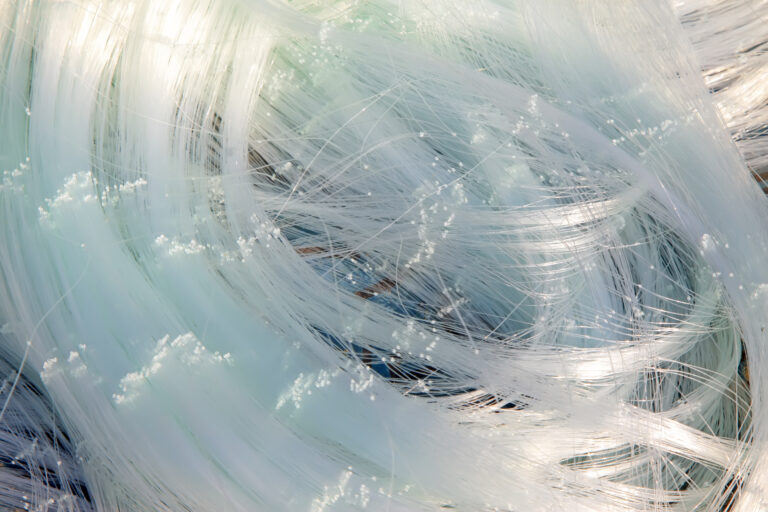
Photo: Nylon Threads
In Japan, the transmission of plant fiber weaving techniques was severely disrupted during the 20th century, and local banana fiber traditions were temporarily interrupted. Bashōfu survived, but its production contracted significantly as silk and cotton became more accessible, and as industrial clothing displaced handwoven regional textiles.
Across both countries, and across the world more broadly, clothing shifted from local agriculture and craft toward centralized industrial systems built on speed, scale, and low cost. This brought consumers an abundance of cheap, synthetic options, while leaving many entirely disconnected from the origins of what they wore.
In recent years, renewed interest in natural fibers, breathable materials, and lower-impact fabric choices has created space for banana fiber to return.
Part of this is driven by a broader shift in how people think about what they wear. There is growing attention to how fabrics perform throughout the day: how they feel against the skin, how they behave in heat, and what materials a person is in contact with for hours at a time. Synthetic fabrics, while ubiquitous, are increasingly scrutinized for their comfort limitations in warm climates, their negative impact on skin health through prolonged contact, and their long-term environmental footprint, including the microplastics they shed with every wash.
Modern banana fiber textiles marketed as apparel-grade typically come from fibers extracted from the pseudostem – a part of the plant traditionally discarded after fruit harvesting. Through textile production, that material is given a second use rather than becoming agricultural waste.
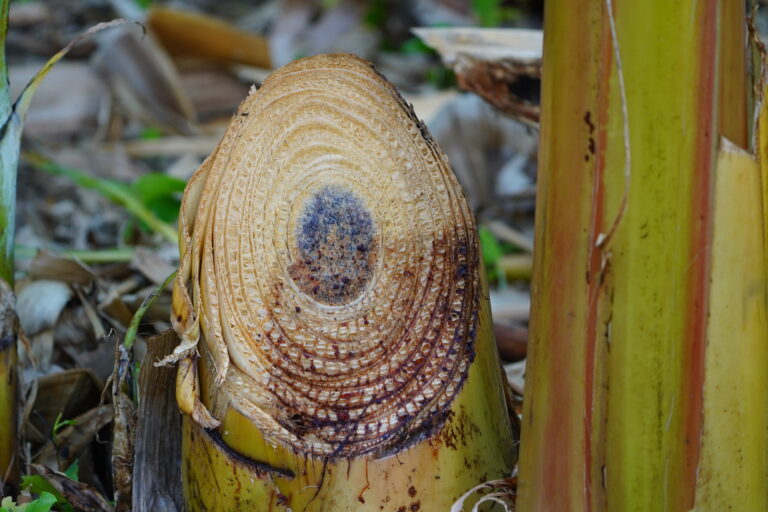
Photo: Pseudostem of a Banana Plant
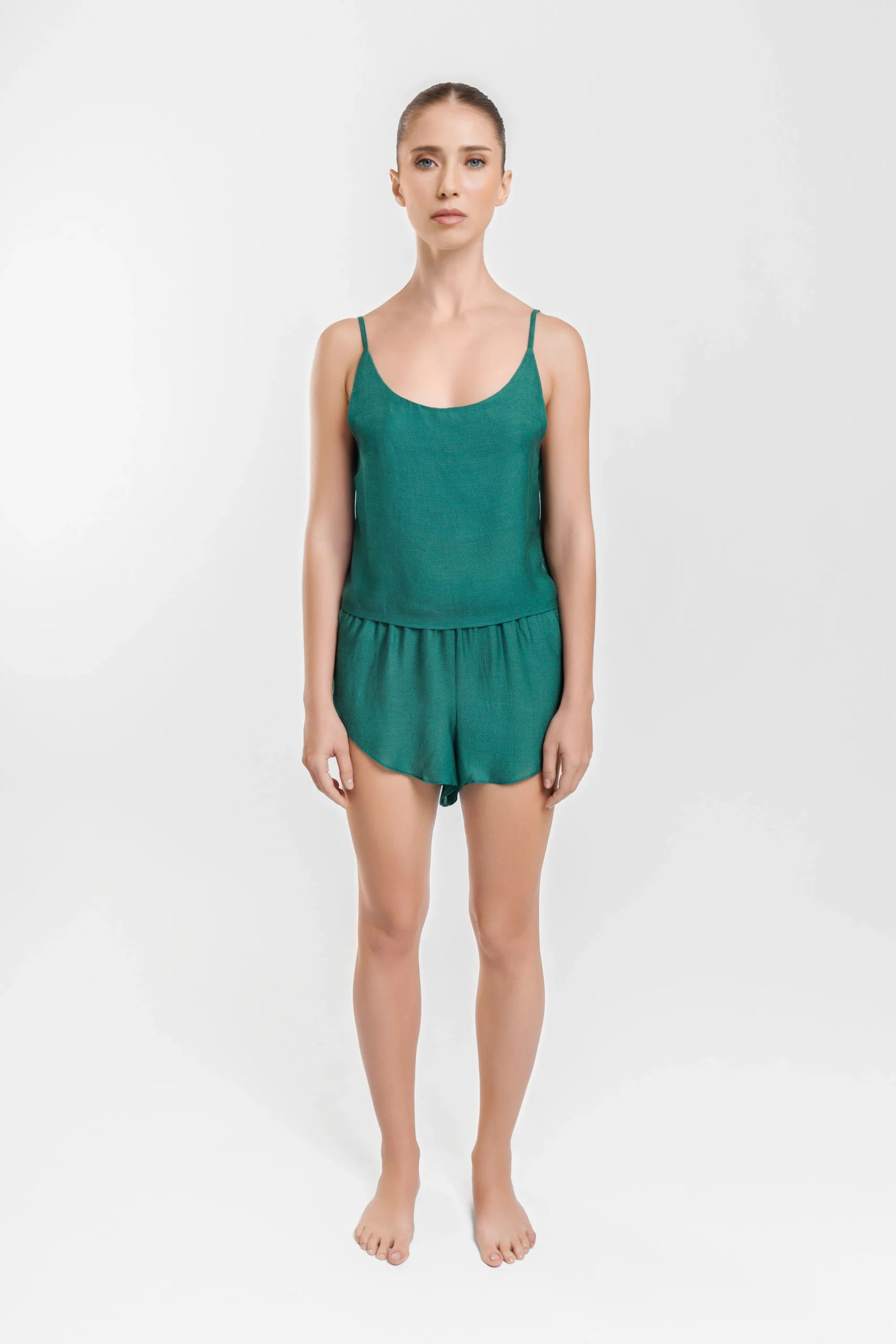
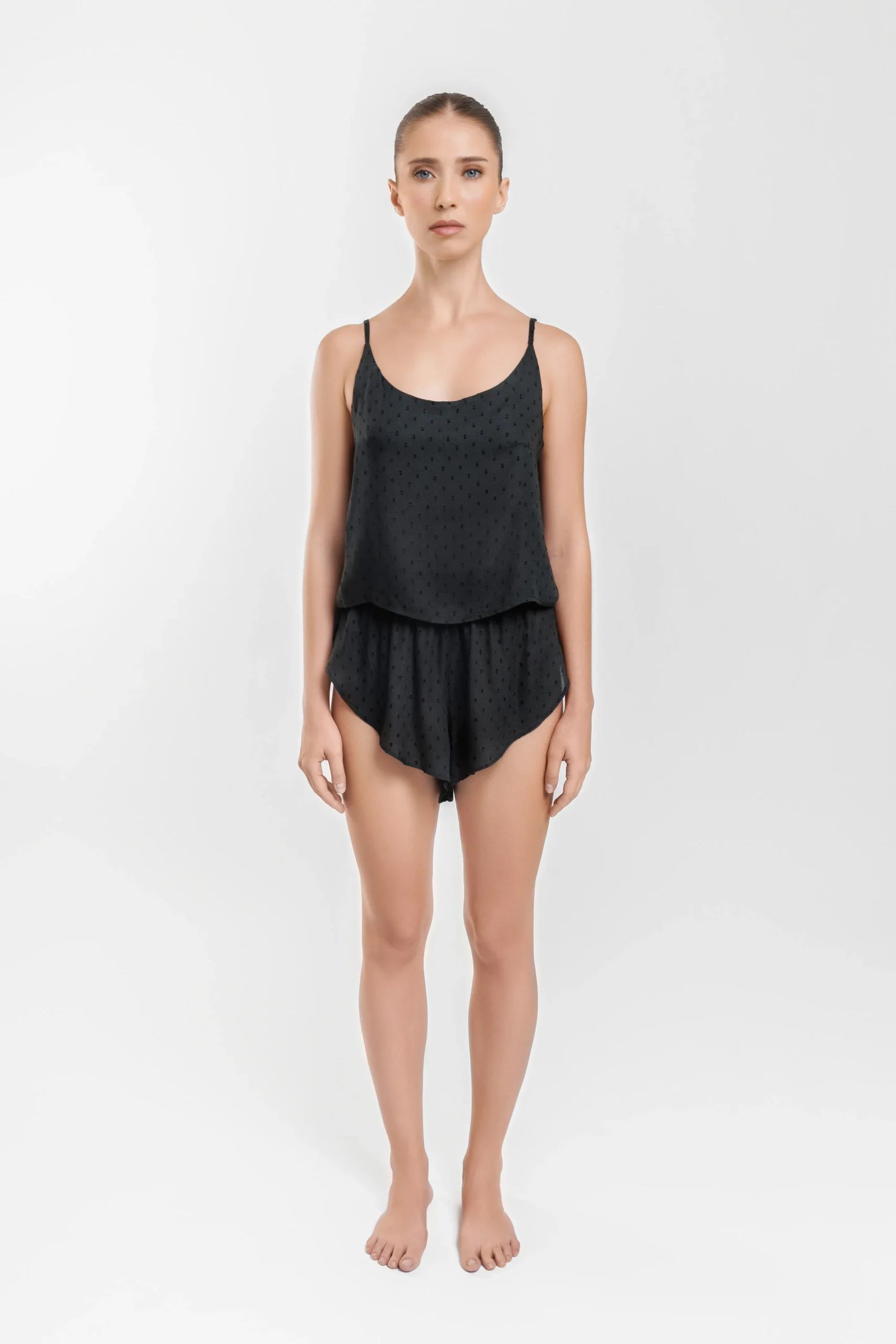
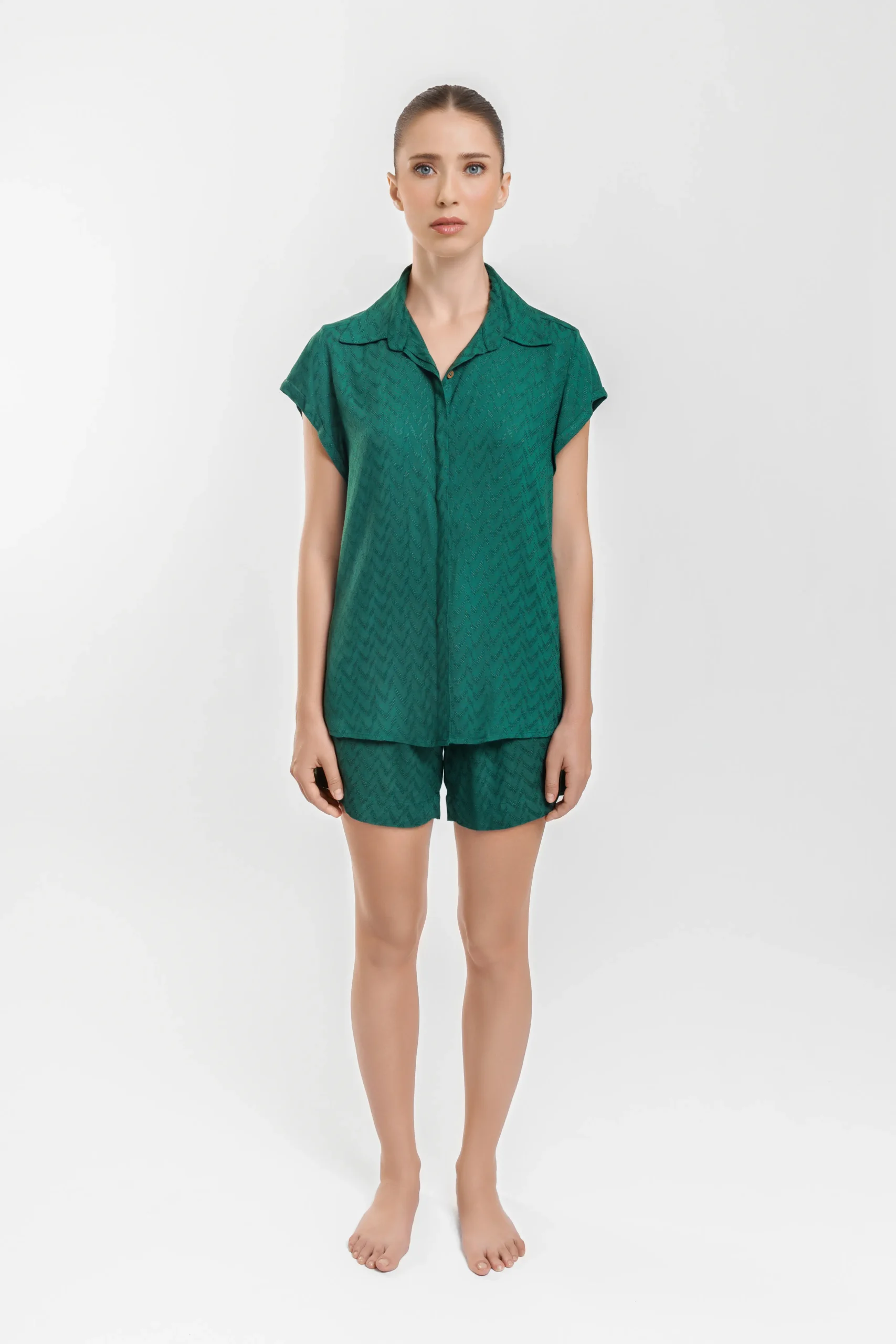
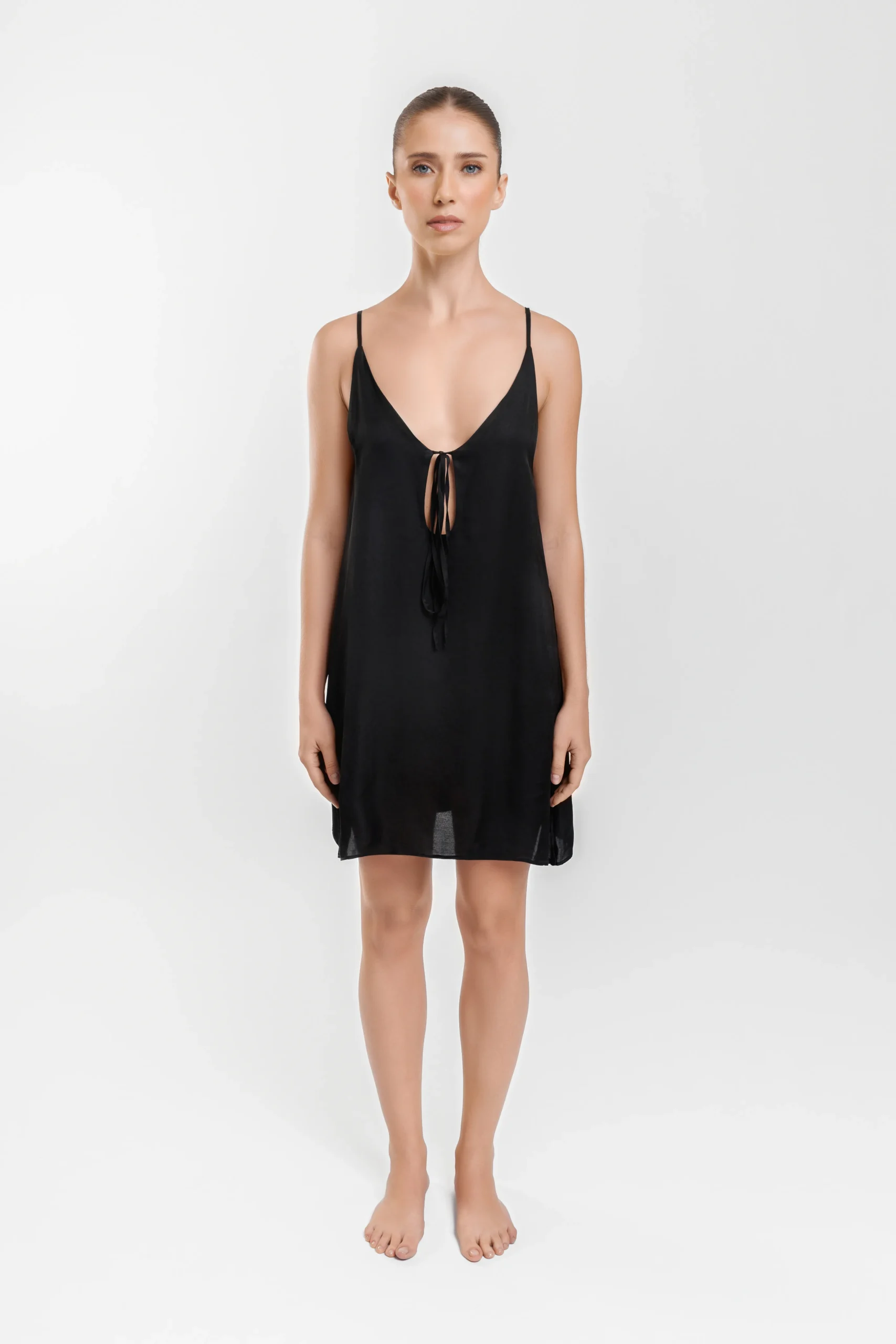
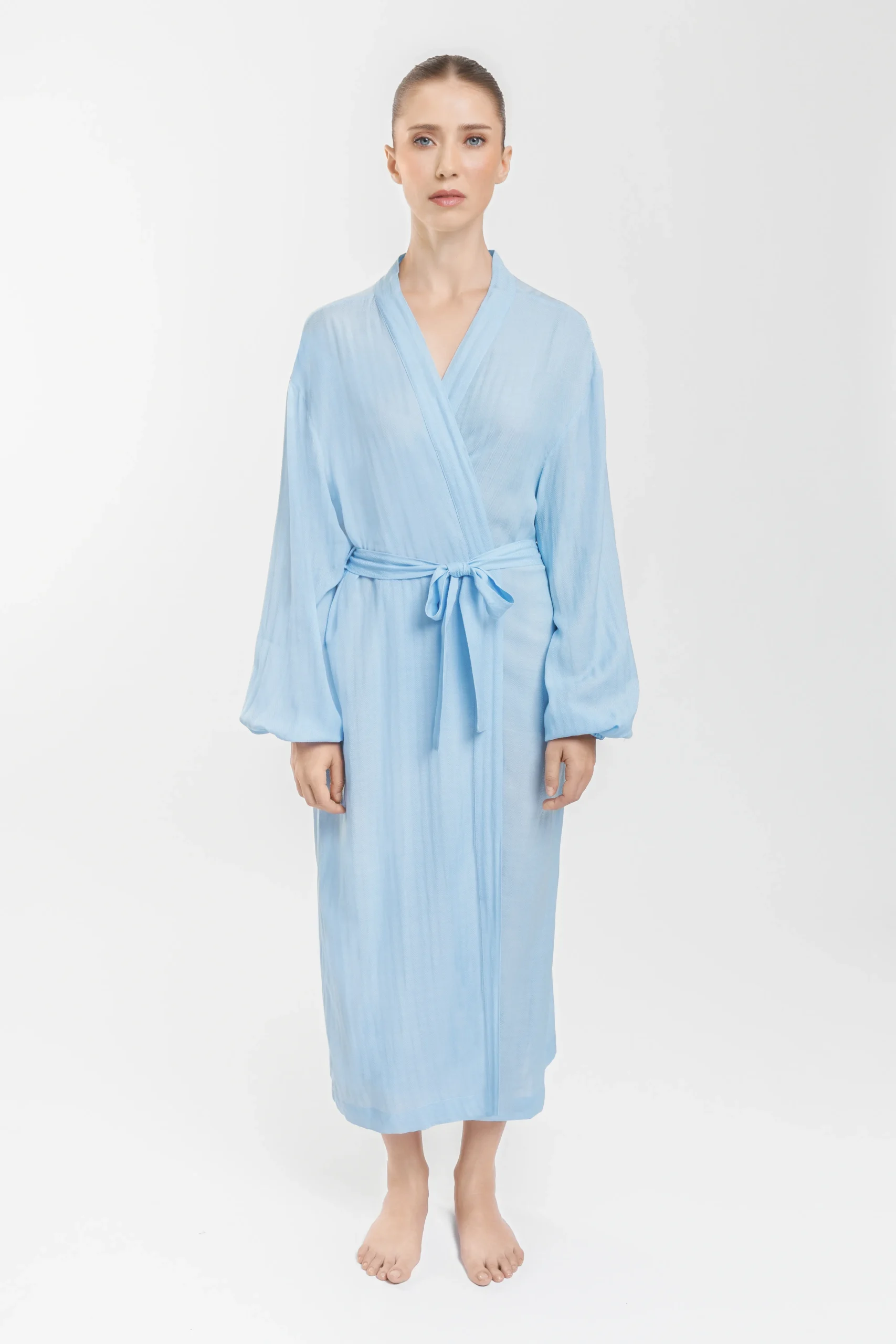
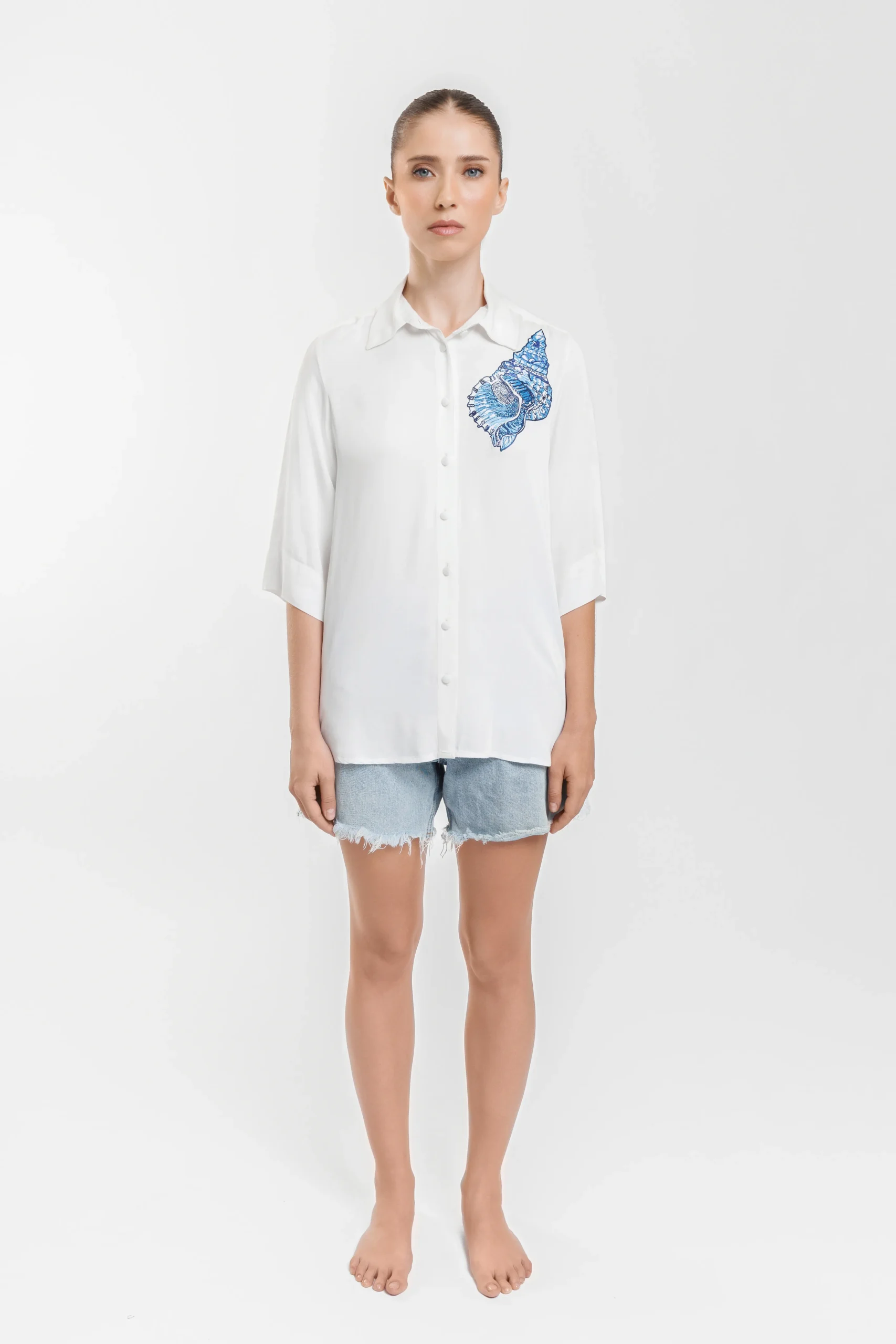
Banana fiber addresses several of these concerns through qualities it has always carried. Depending on the weave and finishing process, the fabric can be lightweight, structured, textured, or notably soft. It allows airflow and regulates temperature — qualities particularly suited to humid climates like Singapore and much of Southeast Asia.
The return of banana fiber is not simply a trend in sustainable fashion. It reflects something more fundamental: a reassessment of what good textile material actually means, and a recognition that the answers do not always require new technology.
Banana fabric sits at the intersection of verified textile heritage and contemporary material thinking. It carries centuries of weaving tradition from Okinawan ito-bashō to Filipino abacá, while answering a modern interest in plant-based, breathable, and traceable fabrics. They are the same properties that made it the preferred cloth in tropical Asia long before synthetic alternatives existed.
Banana fiber brings three distinct qualities to contemporary clothing — breathability, origin, and texture — each rooted in the nature of the plant itself.
As a natural fiber, banana allows air to circulate freely against the skin — delivering the breathability that synthetic garments consistently fail to match.
Banana fiber comes from agricultural material that would otherwise be discarded after the fruits are harvested. Rather than creating something new and unnatural, it extends the life of what nature already provides — finding additional use in what would otherwise be a waste.
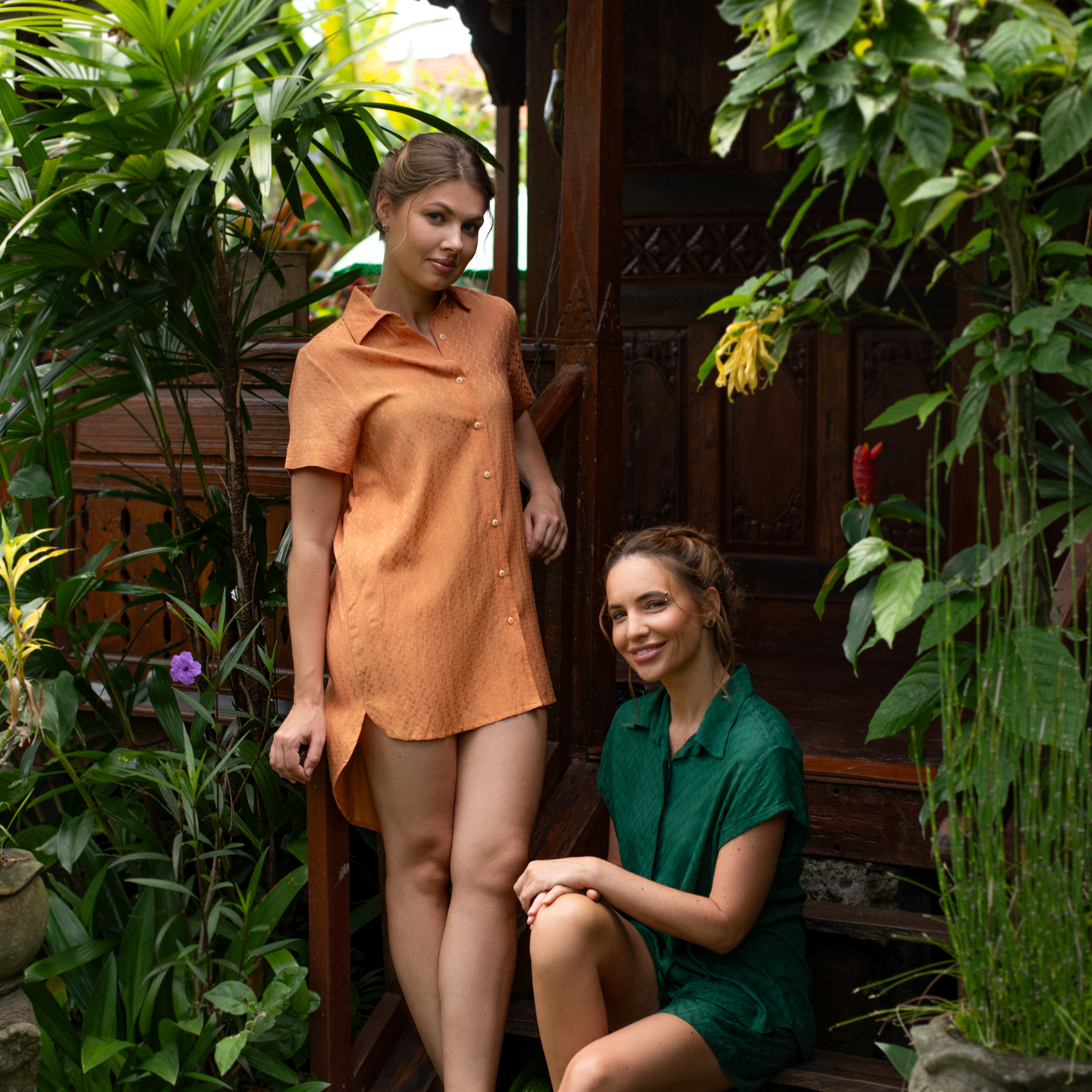
This is where banana fabric reveals its range. At one end, it can be exceptionally soft and weightless: the kind of fabric that drapes against the skin with almost no presence, smooth to the touch and cool from the first wear. At the other, it takes on a more structured character: a surface with subtle body, a gentle sheen, and a woven pattern that catches light without announcing itself. Two entirely different feels. One plant.
Banana fabric has already proven itself across centuries, across climates, across cultures. The question now is how far it can go. As plant-based textiles move from niche to norm, materials with this depth of heritage and this range of expression carry a significant advantage: they are picking up where they left off. For the conscious consumer and those actively building a more sustainable wardrobe, banana fiber represents exactly that intersection – a material with historical grounding, a lower environmental footprint, and a sensory quality that continues to reveal its range. Its potential is already being worn.